
 Français
 Nederlands

In short: a steel gazebo suits a tight budget and a few set-ups a year. An aluminium gazebo is built for frequent professional use: it does not rust and its legs are thicker (45 to 57 mm against 39 mm). Composite is a third, rust-free option in between. The deciding factor is how many times a year you put it up.
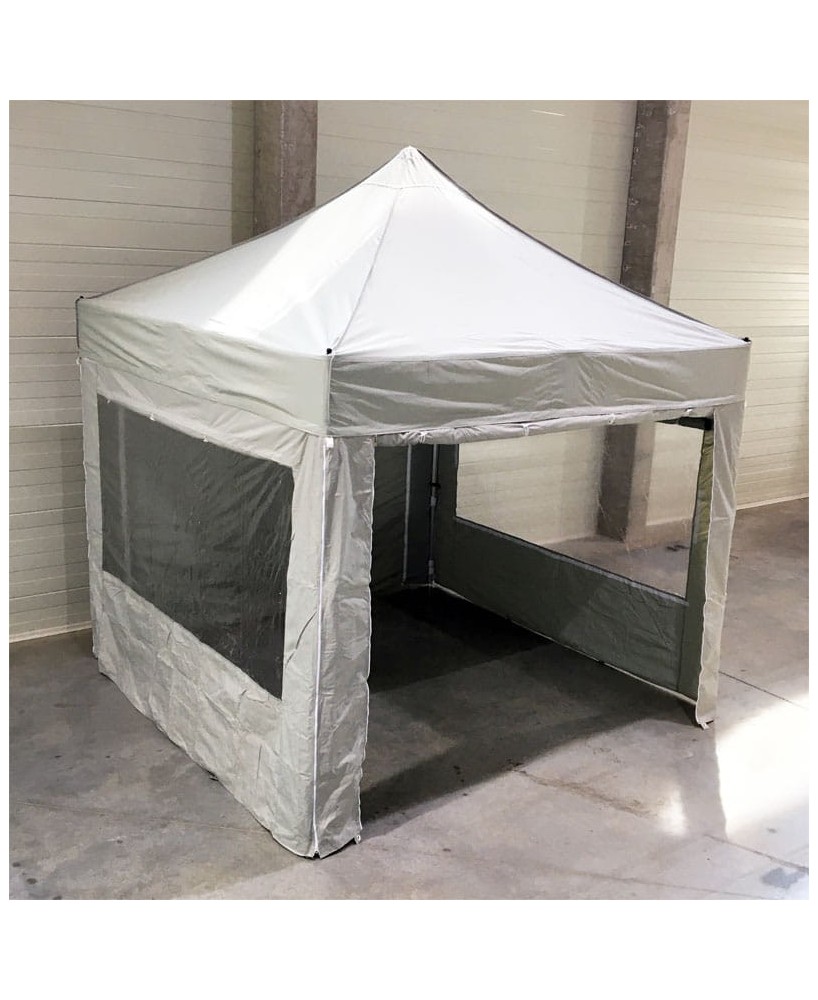
The Pro aluminium pop-up gazebo 3x3 m: 45 mm legs that do not rust.
All our frames are listed in the professional gazebos and pop-up tents category, sorted by material.
Aluminium or steel gazebo: what really changes
From a distance, two pop-up gazebos look alike: the same scissor frame, the same roof, the same tool-free set-up by two people. The difference is in the frame, and it shows mostly after a few seasons. Here are the points that matter, taken from the technical sheets of our ranges.
| Criterion | Steel | Aluminium Pro | Composite Pro |
|---|---|---|---|
| Leg diameter | 39 mm | 45 mm (51 and 57 mm in Pro Plus and Pro Extreme) | 45 mm |
| Material | steel with white epoxy coating | 6063 aluminium, internal reinforcing ribs | 70% fibreglass, 30% vinyl |
| Rust | less resistant to corrosion | does not rust | does not rust |
| Roof | 240 g PVC-coated polyester (about 300 g/m²) | 300 g PVC-coated polyester (about 380 g/m²) | 300 g PVC-coated polyester (about 380 g/m²) |
| Joints | carbon-fibre reinforced nylon | carbon-fibre reinforced nylon (cast aluminium in Pro Plus and Pro Extreme) | carbon-fibre reinforced nylon |
| Bag supplied | protective bag | wheeled bag | wheeled bag |
| Recommended use | a few set-ups a year | frequent professional use | regular outdoor use |
In every range the fabric is fire-retardant and the anchoring kit (pegs and straps) comes with the frame.
Corrosion comes first
A gazebo is often packed away while still damp: after a rainy market, a late tournament or an event by the sea. Aluminium and composite do not rust. Steel is protected by its epoxy coating, but it resists corrosion less well, especially once the coating gets scratched over many set-ups. The more often the tent goes out, the bigger that gap becomes.
Leg thickness and joints
The 39 mm legs of the steel range are enough for occasional shelter. The aluminium ranges go up to 45, 51 and 57 mm, which gives a stiffer frame when you put it up and take it down often. The joints, the parts that connect the scissor bars, are carbon-fibre reinforced nylon on the steel, Pro and composite ranges, and cast aluminium on the Pro Plus and Pro Extreme.
The roof fabric
The steel gazebo roof is 240 g PVC-coated polyester (about 300 g/m²). The aluminium and composite ranges use 300 g (about 380 g/m²). People often forget this when comparing frames: the fabric wears too.
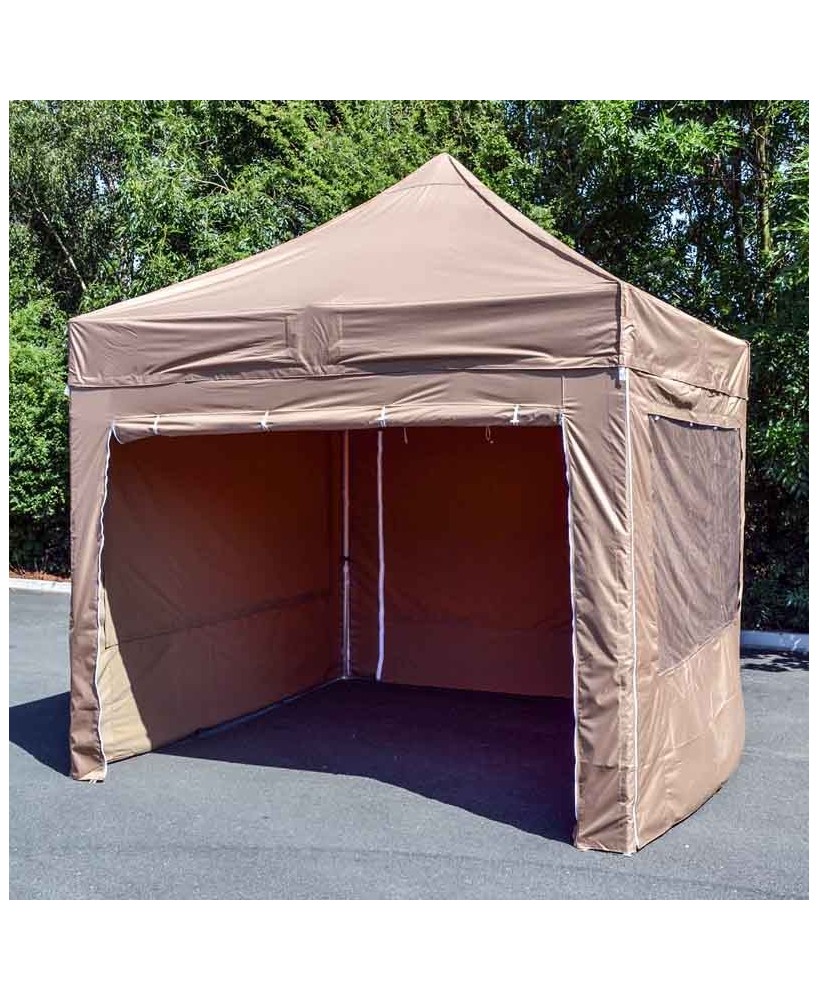
The steel pop-up gazebo 3x3 m: the entry range, for a few outings a year.
How many set-ups a year? The real deciding factor
Rather than comparing materials in the abstract, count your outings. It is the first question we ask every customer who calls us.
- A few outings a year (school fair, flea market, open day, local festival committee): a steel gazebo does the job, as long as you store it dry.
- Once a week or more (weekly market, sports club, mobile trader, food truck): go for aluminium. The Pro aluminium pop-up gazebo 3x3 m is our best value for this use.
- Very frequent set-ups, rental, multi-day events: choose the Pro Plus or Pro Extreme, with thicker legs and cast aluminium joints.
- Regular outdoor use and a wish for an alternative to aluminium: look at composite.
In Belgium and northern France, many gazebos spend the winter in a garage or trailer. If the tent stays folded for a long time, sometimes damp, a material that does not rust saves you unpleasant surprises in spring.
The aluminium ranges: Pro, Pro Plus and Pro Extreme
In our aluminium pop-up gazebos category, three levels match three rhythms of use:
- Pro (45 mm): 6063 aluminium with internal ribs, 205 cm high walls, wheeled bag. For markets, clubs, municipalities and catering.
- Pro Plus (51 mm): octagonal 8-sided legs and cast aluminium joints, stiffer than nylon joints. For event organisers, rental companies and businesses that set up very often.
- Pro Extreme (57 mm): our toughest range, with 230 cm walls and a PVC skirt that limits water and mud coming in. For rental, motorsport, festivals and multi-day events.
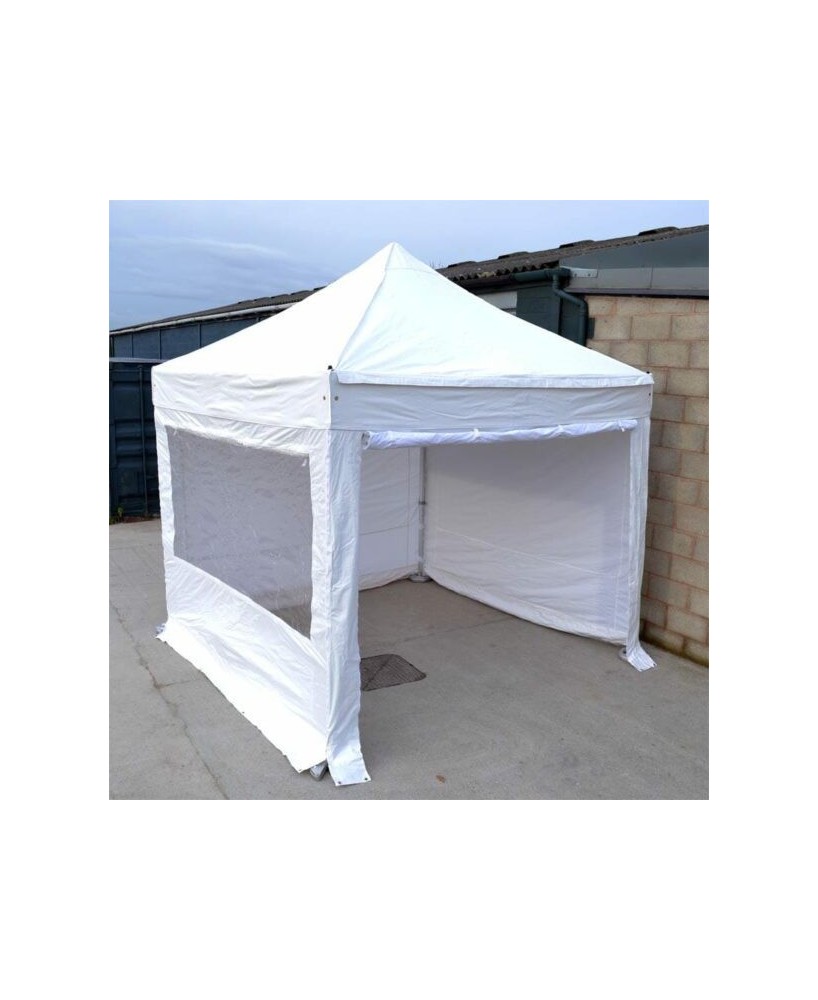
The Pro Extreme 3x3 m: 57 mm legs and cast aluminium joints.
Torn between two ranges? Tell us how you will use it: our advice is free and without obligation.
What about a composite gazebo?
The Composite Pro pop-up gazebo uses 45 mm legs made of composite (70% fibreglass, 30% vinyl). Like aluminium, it does not rust, which suits regular outdoor use. It shares the 300 g fabric, the carbon-fibre reinforced nylon joints and the wheeled bag of the Pro range. It is a real alternative for buyers who want to avoid steel without necessarily choosing aluminium.
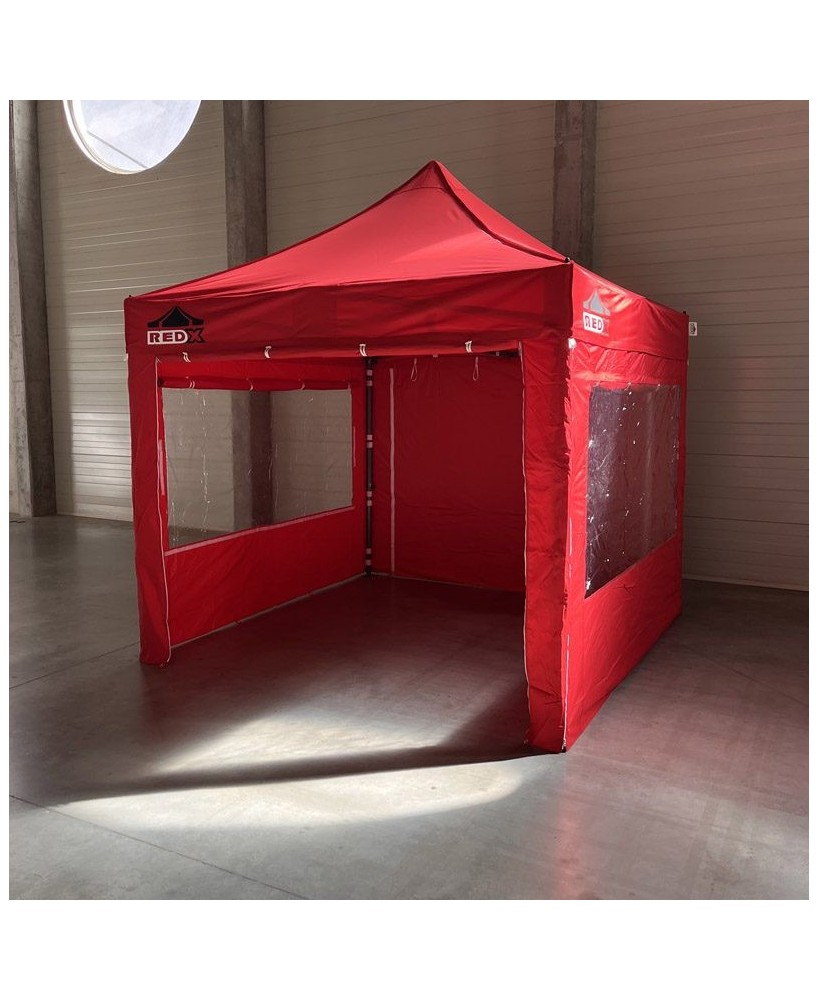
The Composite Pro 3x3 m: a frame that does not rust.
Printing and lead times: the same for every range
The material changes nothing about customisation. Steel, aluminium or composite: the roof, walls and valances can be printed with your logo by dye sublimation. You approve a mock-up before production, then allow about three weeks between approval and delivery. Everything is explained in our guide to the custom printed gazebo with your logo.
For a white or coloured gazebo in stock, delivery takes 3 to 4 working days, in Belgium and in France.
Video: Vision One : Barnums Pliants Professionnels
Looking after your gazebo, whatever the material
A few simple habits extend the life of any frame:
- let the fabric and frame dry before storing them for a long time;
- never force the scissor bars when unfolding: set up with two people, one on each side;
- always anchor the tent, even in calm weather, with pegs on grass or weights on hard ground (see our guide on weighting a pop-up gazebo against the wind);
- replace a damaged part rather than the whole tent: we supply spare parts.
For more on sizes and uses, read how to choose a pop-up gazebo.
Frequently asked questions
What is the difference between an aluminium and a steel gazebo?
In our ranges, the steel gazebo has 39 mm epoxy-coated legs and a 240 g roof; it resists corrosion less well. The aluminium gazebo has 45 to 57 mm legs that do not rust and a 300 g roof. Steel is meant for a few set-ups a year, aluminium for frequent professional use.
Can a steel gazebo be used professionally?
Yes, for occasional use: a few events a year, an association, a small shop. For a weekly market or a tent that often stays outside, aluminium or composite will last better.
Is a composite gazebo a good choice?
Yes, if you want a frame that does not rust without moving to aluminium. The Composite Pro has 45 mm legs, the same 300 g fabric as the Pro range and a wheeled bag.
Can a steel gazebo be printed like an aluminium one?
Yes. Every range accepts a roof, walls and valances printed with your logo, with the same lead time of about three weeks after approval of the mock-up.
Which range for a weekly market?
The Pro aluminium gazebo is our starting recommendation: 45 mm legs, 300 g fabric, wheeled bag. If you set up several times a week or rent the tent out, look at the Pro Plus or Pro Extreme.
Need advice on steel, aluminium or composite? Call us on +32 470 75 38 29 or write to us: quick reply, free quote, delivery in Belgium and France.